
Digital planning, construction and operation with IPS: Why clear BIM standards are the key to success
by Prof. Dr. Lisa Lenz | February 20th, 2026
Immobilien- und Projektmanagementgesellschaft Sachsen-Anhalt mbH (IPS) is one of the most versatile and innovative construction companies in Germany. The company carries out a wide range of different construction projects, from the development of complex existing properties and comprehensive renovations to modern new buildings. This diversity inevitably leads to very heterogeneous requirements. Different project sizes, changing stakeholders and individual operator requirements mean that adaptability is essential in every project.
To make this complexity manageable while increasing quality, transparency and efficiency, IPS relies on Building Information Modelling (BIM). The aim is to use BIM strategically, consciously and practically in order to be able to transfer the BIM methodology to various areas of application. Together with Building Information Management GLW GmbH (BIM GLW), IPS has developed an approach that defines clear standards, structures processes and, at the same time, provides the necessary flexibility to ensure that BIM and a holistic approach to digitalisation create real added value in everyday project work, from project development and planning to construction and operation.
AIA reimagined: Why the success of projects always begins with clear decisions and requirements

Anyone who wants to successfully implement a BIM project needs a stable starting point, which is provided by IPS’s client information requirements. These form the methodological basis for all digital activities within the company. The AIA specify which data, models and structures IPS requires in which project phase, which attributes are relevant, which formats must be delivered and how information flows during the course of a project.
But what makes the IPS AIA special is not only its clarity, but also its practical relevance. During development, care was taken to request only information that is truly relevant to planning, construction and operation. Excessive or contradictory requirements, which are commonplace in many AIA documents in the industry, were consistently avoided. This creates a framework that challenges project participants, but at the same time forms a stable basis for requirements, quality assurance and data analysis.
This focus on real processes and early decisions by the IPS ensures that all project participants can find their way around more quickly, tasks can be distributed more efficiently and a common technical language can be developed. The AIA is therefore much more than a document: it is the basis for a structured and sustainable understanding of BIM throughout the entire project environment.
From paper to practice: How specifications in the BEP become a functioning and successful project
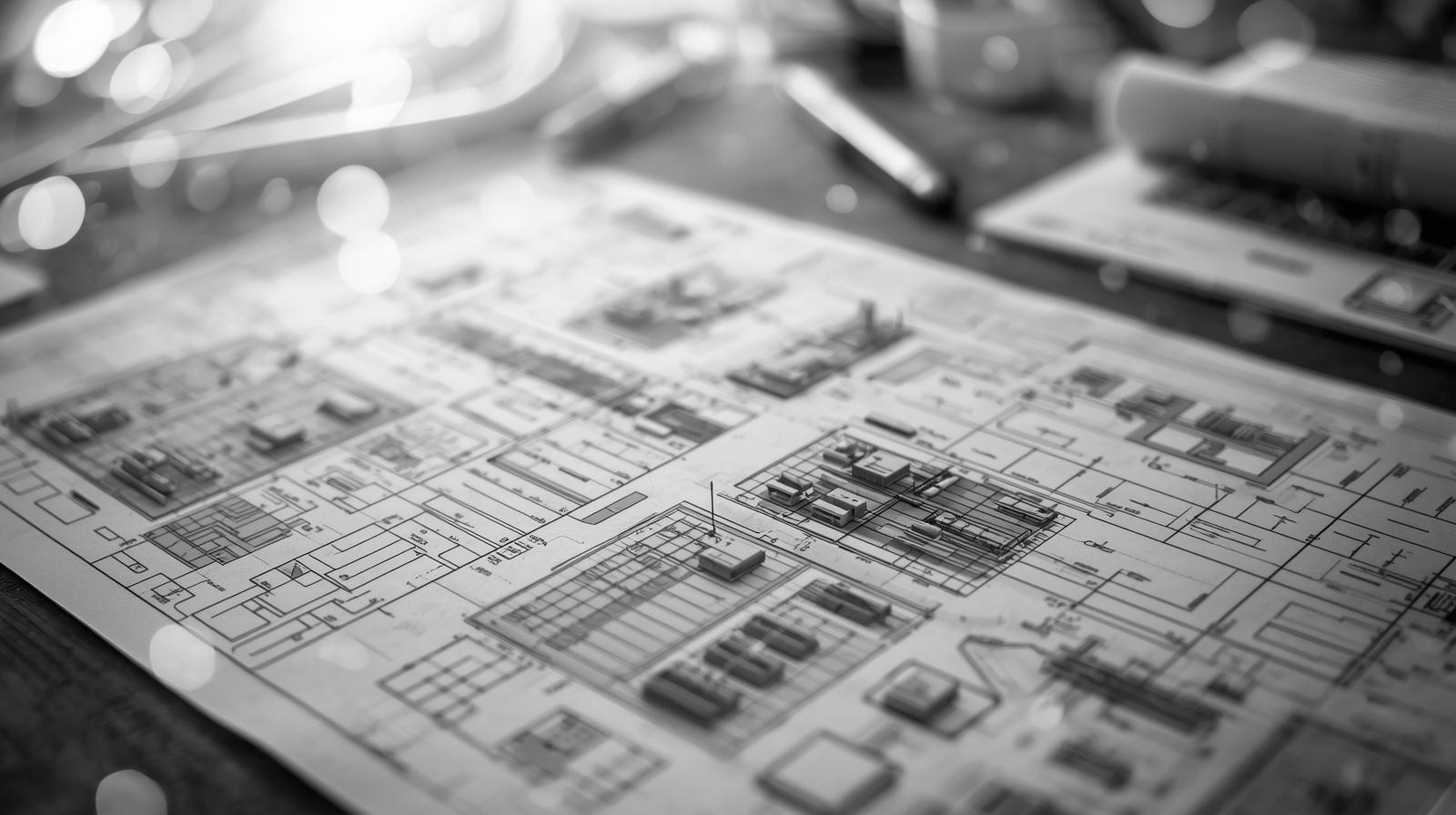
While the AIA defines the strategic perspective, the BIM execution plan (BEP) incorporates these requirements into the day-to-day operations of projects. The BEP describes exactly how BIM models are structured, what roles and responsibilities exist, how information exchange is organised, and what quality checks and data evaluation processes take place and when.
The balanced relationship between uniform standards and project-related, individual adaptability is particularly valuable here. IPS relies on a modular BAP system that creates a recurring structure across all projects while leaving enough leeway to take into account the special features of individual construction measures.
This results in a BIM process that creates clarity and commitment for all project participants. This leads to fewer coordination problems in the planning and implementation phase, comprehensible planning statuses, transparent decision points and more efficient processes.
Structure instead of chaos: Why MEM ensures the quality of models in the long term

The Model Element Matrix (MEM) is one of the most effective tools in IPS’s digital project management. It defines how components are structured, what information (attributes) they contain and what level of detail is required in the various project phases.
The MEM not only ensures that BIM models are technically sound, but also creates consistency, which is a significant advantage in practice. Planning offices know exactly how objects must be named, classified and attributed. Construction companies receive reliable and comparable information and can create the basis for a robust data structure for the subsequent operational phase.
Reusability is particularly valuable: BIM models created in accordance with MEM can be quickly checked, efficiently evaluated and easily transferred to other systems. For IPS, this means a significant increase in data quality and, in the long term, a considerable reduction in redundant work processes, right through to operations.
Construction project management primarily uses data-driven AI methods that analyse large amounts of data and derive forecasts or recommendations for action.
A particular strength of AI lies in its close integration with existing construction project management processes. AI methods can be used in a targeted manner along the functional distinction between administrative and decision-related processes. While administrative processes benefit in particular from automation techniques such as NLP or computer vision, learning-based methods such as machine learning or deep learning support complex decision-making processes.
In combination with BIM, integrated digital project environments are created in which data is used consistently and evaluated continuously. This symbiosis not only enables more efficient processes, but also a new level of transparency and traceability. Project participants gain a better overview of the project status, risks and dependencies, which significantly improves collaboration and control.
From BIM model to long-term benefits: How IPS takes a holistic view of the entire life cycle with FM & CAFM concepts

Many BIM projects have shortcomings in that, although the methodology works excellently in the planning and, where applicable, construction phases, the data obtained is not transferred cleanly to the operational phase at the end. In this context, IPS pursues a holistic approach in order to achieve maximum efficiency gains, especially in the longest and most cost-intensive phase of the life cycle, namely operation. An operator and CAFM concept has therefore been developed that precisely describes what information is required for subsequent operation of the associated processes, how this information must be structured and how it is transferred to a CAFM system (computer-aided facility management system). A CAFM system is a software solution that digitally maps and supports all operational, maintenance and administrative processes of a building – from room and space management to maintenance cycles to technical systems and documentation.
For this system to work reliably, the information generated during the planning and construction process must be consistent and fully structured. This is precisely where the developed concept comes in: it clearly defines which data and component information is actually relevant for facility management (FM). This approach ensures that the information required in the long term is already generated during the planning and construction phase. The entire life cycle of a building is thus digitally mapped, from the initial sketch to daily management.
This makes BIM at IPS a consistently usable methodology that has an impact far beyond the construction phase. This has the advantage that data can be used more transparently and efficiently in all project areas. In addition, operating costs are reduced, sustainability is increased and there is a significantly better information base for decisions throughout the entire service life of the building.
Quality you can see: How structured model reviews ensure project success
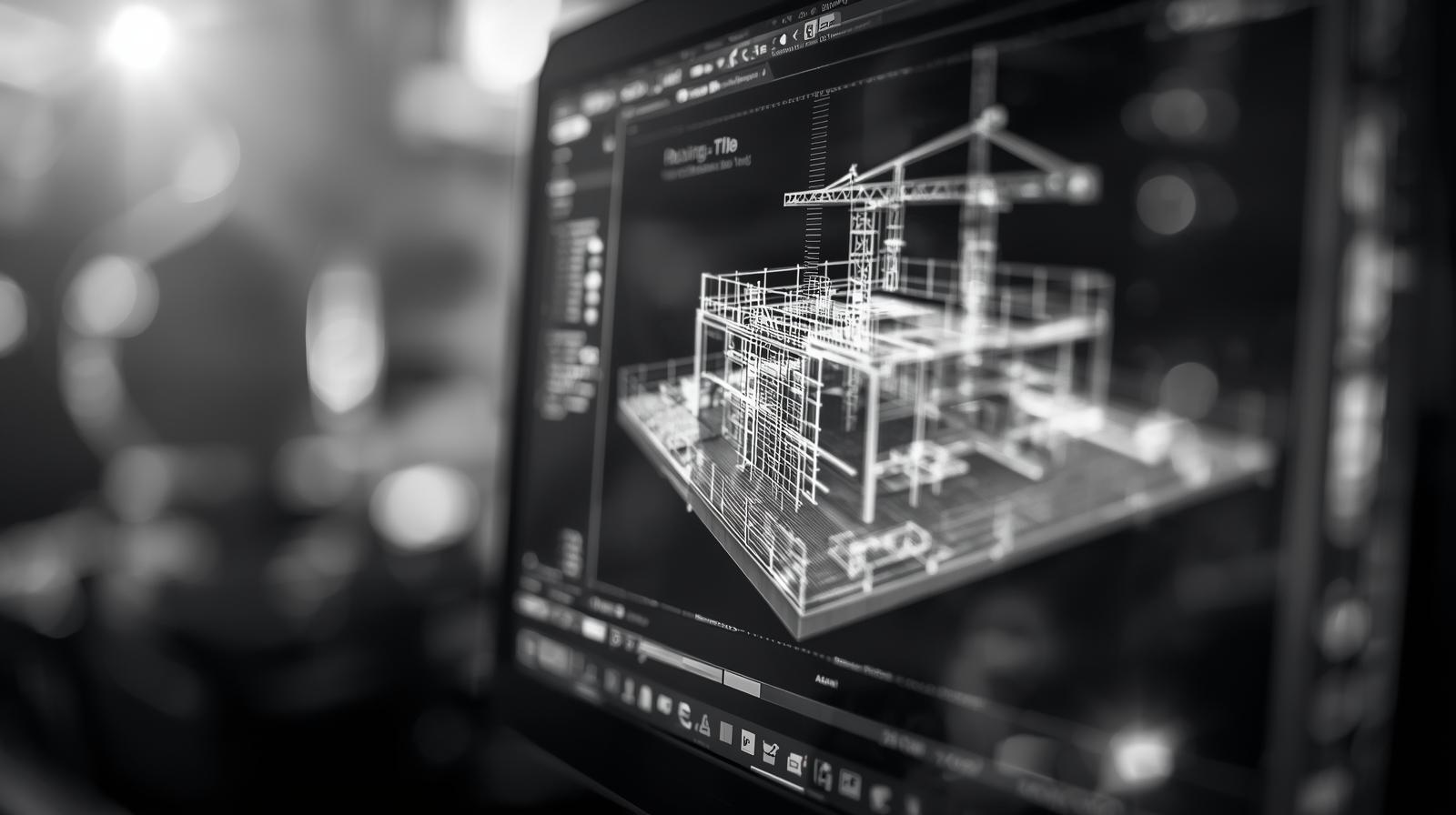
A digital process is only as good as its quality assurance. IPS therefore relies on regular, systematic model checks carried out by BIM GLW. These checks are not limited to collision control or model completeness, but involve a comprehensive analysis of data quality, structure and interfaces. In addition, the BIM models are checked for compliance with standards and guidelines as well as with building regulations.
The results are presented in clearly formulated reports and to-do lists are distributed via BIM Collaboration Format (BCF), which is understandable and accessible to all parties involved. These reports serve as a decision-making aid, proof of the quality of the planning status and a tool for continuous improvement.
This transparent and practical form of quality assurance makes risks visible at an early stage, planning errors can be avoided more easily and the overall process becomes significantly more stable.
Conclusion: A holistic BIM approach developed for project teams
Digitalisation in the construction and real estate industry is successful when it is geared towards actual requirements and a project team with the right mindset comes together to work towards the project’s goals. The collaboration between IPS and BIM GLW impressively demonstrates that clear standards and flexible processes are not a contradiction, but rather an important combination. With AIA, BAP, MEM and the FM and CAFM concepts, IPS has created an ecosystem that structures the entire project landscape, increases quality and forms the basis for a continuous digital life cycle in the long term. At the same time, consistent quality assurance ensures that these standards work in everyday life and provide real added value.
At IPS, BIM is not used as an end in itself, but as a tool for improved planning, implementation and more sustainable management. The result is a future-proof, practical and clearly structured BIM approach that meets the diverse project requirements and creates the basis for long-term digital competence within the company.
Would you like to learn more about how you can successfully design projects together digitally?
If you would also like to optimise your project workflows with clear BIM standards, well-structured processes and collaborative partnerships, please do not hesitate to contact us. Together, we will develop digital solutions that create added value for you.
