
Digitalisation in the construction industry with BIM: Strategies for sustainable competitiveness
von Alexandra Nestorowicz & Zoë Gebicke | April 22nd, 2026
The construction and property sector is undergoing a profound transformation. Digital technologies are transforming not only individual processes, but the entire way in which projects are planned, built and operated. At the heart of this transformation lies Building Information Modelling (BIM). BIM is a collaborative working methodology for the model-based, lifecycle-spanning analysis of construction projects and is therefore a key driver of efficiency, transparency and competitiveness in an increasingly complex and interconnected industry.
Particularly in times of rising construction costs, growing regulatory requirements and an increasing shortage of skilled workers, it is becoming clear that traditional working methods are reaching their limits. Companies face the challenge of delivering projects faster, more sustainably and, at the same time, more cost-effectively. This is precisely where BIM demonstrates its strategic relevance.
Building Information Modelling (BIM) refers to a digital, model-based method for the integrated design, construction and management of buildings. All relevant information is consolidated into digital BIM models, which serve as central data sources for all project stakeholders. BIM thus replaces traditional 2D design approaches and lays the foundation for transparent, collaborative and data-driven processes throughout a building’s entire lifecycle.
Despite its enormous potential, there is currently still a significant implementation gap in practice. Studies show that whilst the industry recognises the need, it often fails to implement it. This is precisely where BIM consultancy comes in: it supports companies in shaping digital transformation in a structured and sustainable manner, placing people at the centre as the decisive factor for success and as decision-makers.
A key metric for evaluating investments is the return on investment (ROI). It serves as a benchmark for the economic assessment of projects in both strategic and operational management. Studies show, however, that the uncertainty surrounding the assessment of ROI is one of the biggest obstacles to investment decisions. If projected costs or expected profits cannot be reliably determined, the likelihood of an investment being implemented decreases. This uncertainty may contribute to the declining number of completed factory buildings.
A key reason for this situation is that, to date, there has been no holistic approach to cost estimation across the entire life cycle of a factory. A lack of transparency regarding investment and operating costs can lead to a distorted assessment of economic viability. The aim of the approach presented here is therefore to develop a model-based cost estimation method that systematically integrates investment and operating costs and provides a sound basis for investment decisions.
Understanding BIM: Market demand, definition and current figures

To make strategic use of BIM, it is first necessary to understand why the method has become indispensable today. The construction industry is under immense pressure to improve efficiency: rising costs, a shortage of skilled workers, more complex projects and increasing sustainability requirements are driving the need for innovation. Added to this is the growing pressure from clients, who are increasingly demanding digital working methods, transparency and traceable data models.
Current figures clearly underscore this trend:
- According to a PwC study (2025), 82% of construction companies lack the necessary expertise to fully exploit the potential of digitalisation.
- According to Bitkom Research (2025), 56% of companies recognise the significant potential of BIM for the construction sector.
- Only 17% of the experts surveyed state that digital solutions are already actively required in tenders.
These figures reveal a clear discrepancy. There is an awareness of the benefits, but structural implementation is lagging behind.
BIM is not merely an IT issue, but a holistic approach to process optimisation. Centralised data storage makes information available at all times, thereby reducing planning errors, minimising interface losses and enabling more informed decisions to be made. Companies that integrate BIM at an early stage secure not only efficiency gains, but also a clear competitive advantage.
Challenges in BIM implementation

Despite the obvious benefits, implementing BIM is a complex process for many companies. Ongoing project work and day-to-day operations make it difficult to introduce far-reaching changes. Often, it is not a lack of understanding of the benefits that is the issue, but rather a lack of capacity to implement them consistently in day-to-day operations.
The biggest challenges can be divided into three key areas:
Organisational silos
Many companies continue to operate in separate departments and linear process chains. BIM, however, requires an integrated approach in which design, construction and operation are interconnected. This shift entails a profound cultural and structural transformation that must take place across all levels of the organisation to foster sustainable success.
Skills gaps
A major bottleneck is the shortage of qualified specialists. A lack of knowledge regarding BIM methods, software solutions and data standards means that existing potential cannot be fully exploited. Companies must therefore not only be prepared to adopt a new method, but also train their staff accordingly.
Technological complexity
Selecting suitable software solutions, interfaces and data standards poses major challenges for many companies. Without a clear strategy, inefficient siloed solutions emerge instead of end-to-end digital processes.
Added to this is an often underestimated factor: the organisation’s willingness to change. Digitalisation is not just about technology, but above all about changing working methods, responsibilities and ways of thinking. Without targeted change management, many BIM initiatives remain stuck at the pilot stage.
Our consulting approach: Structured BIM implementation

The BIM-Consulting service addresses precisely these challenges. The aim is to help companies align themselves with BIM not only technically, but also strategically and organisationally. The consultancy approach is modular in structure and can be scaled to suit individual needs, meaning it can be adapted to different companies accordingly.
- Status Quo Analysis
The process begins with a comprehensive review of existing processes, system landscapes, digital maturity levels and resources. The aim is to establish clear transparency and awareness of strengths, weaknesses and potential. - Strategy and Concept Development
Based on the analysis, individual BIM strategies are developed in collaboration with the company. This includes defining BIM objectives, prioritising BIM use cases and modelling future target processes. - Implementation
This phase involves the operational implementation of the BIM strategy. This includes selecting suitable software solutions, defining data and communication standards, and introducing collaborative workflows and accountability structures. - Implementation & Pilot Projects
The first real-world BIM projects serve to validate the developed concepts. Staff training, coaching and continuous optimisation ensure that BIM is not only introduced but also firmly embedded within the organisation.
This structured approach ensures that BIM is not viewed as an isolated project, but as a company-wide transformation with measurable added value.
The potential and measurability of BIM implementation
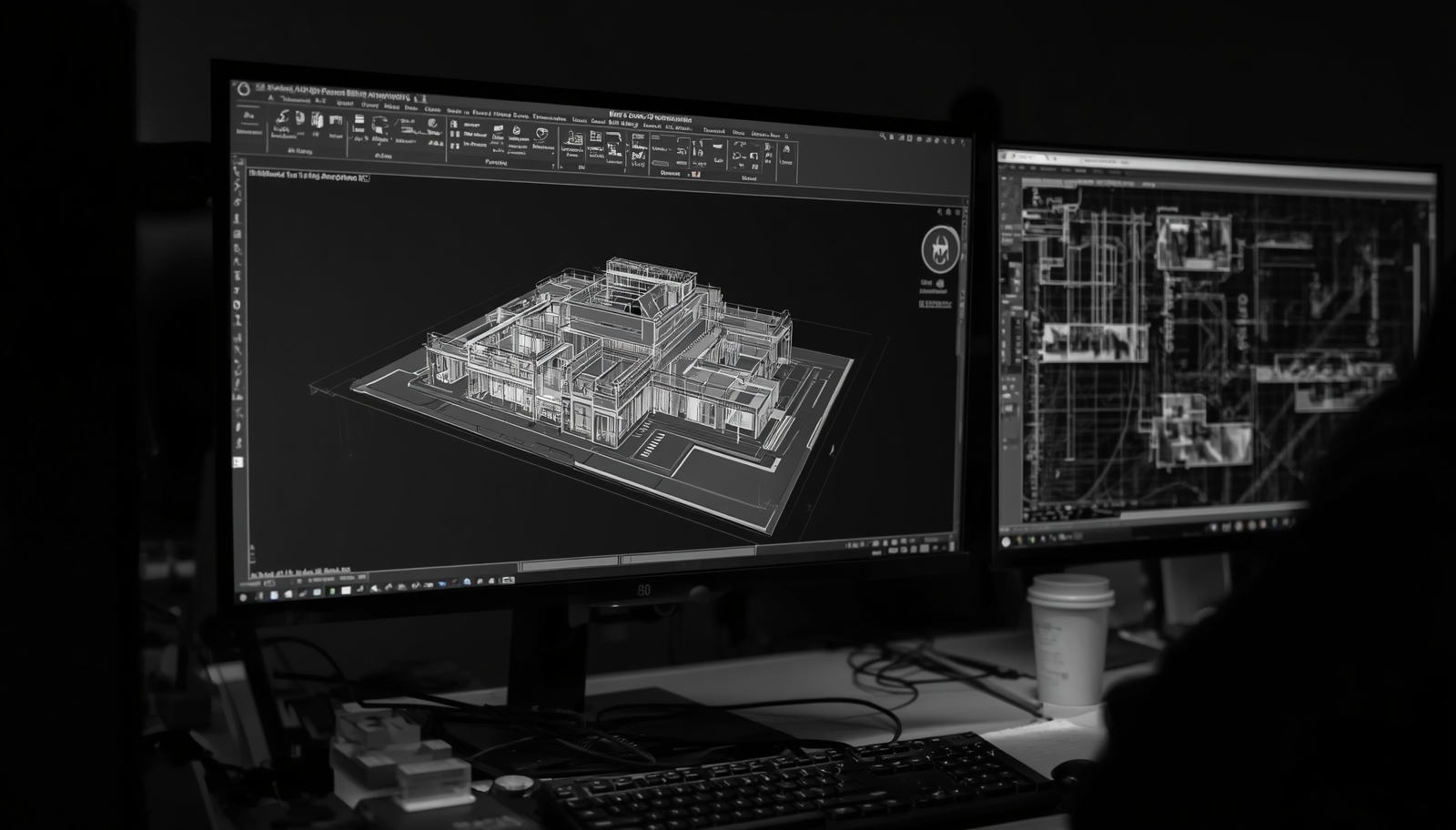
The introduction of BIM is not an end in itself, but a strategic tool for improving business performance. The benefits it delivers can be clearly measured and translated into specific KPIs.
Efficiency and cost reduction
Early-stage clash detection, automated quantity take-offs and optimised coordination across all disciplines significantly speed up design and construction processes. Errors are identified earlier, which reduces rework and lowers costs.
Improved quality
Digital models enable data-driven decision-making. This minimises planning errors and enhances overall quality throughout the entire life cycle of a building.
Competitiveness
Companies that actively use BIM position themselves as innovative market players. In the public sector in particular, the use of digital methods is increasingly becoming a prerequisite for tenders.
Sustainability and life-cycle thinking
BIM enables a holistic view of buildings – from planning through to operation and demolition. Life-cycle costs, energy efficiency and carbon footprints can be assessed and optimised at an early stage.
Overall, this results in clear KPI-driven added value: fewer errors, lower costs, higher quality and a stronger market position.
Putting people first: Change management as a key to success
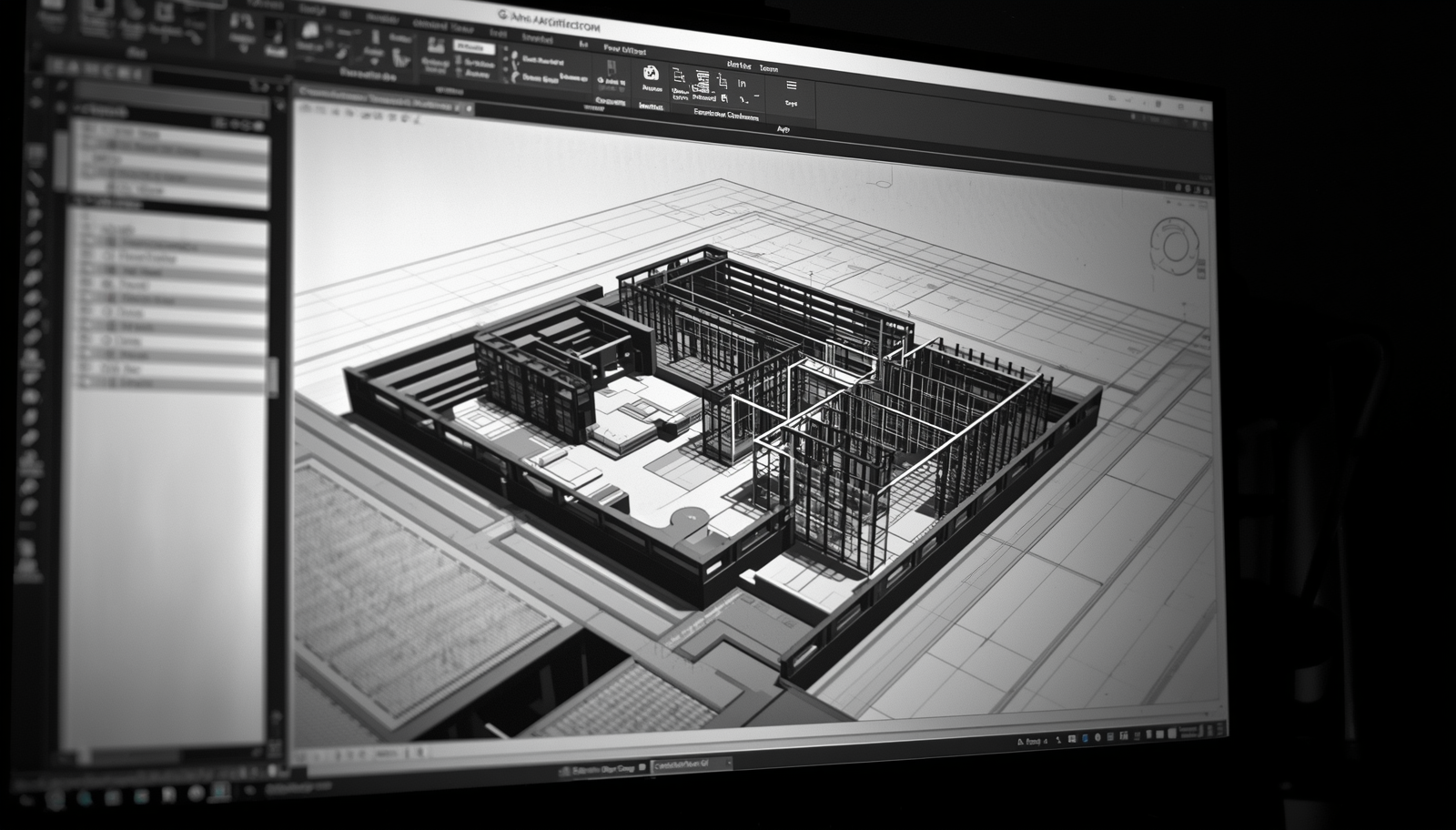
Technology alone is not enough to successfully implement BIM. The decisive factor is people. Change can only be sustained if it is understood, accepted and actively shaped by employees. BIM GLW’s BIM consultancy therefore deliberately adopts a people-centred approach. The focus is not on the software, but on the organisation and its employees.
Change management as a core process
Transformation is actively supported – not just technically, but culturally. Teams are involved at an early stage to reduce resistance and build acceptance.
Support structures in day-to-day operations
Support desks and continuous access to support ensure that employees are not left to their own devices in their day-to-day operations. Questions are answered quickly, and uncertainties are reduced.
Working as equals
Transparency and collaboration are central principles. BIM is not ‘imposed from above’, but developed and implemented jointly.
This approach marks the difference between short-term implementation and sustainable transformation. Companies that put people at the centre achieve a significantly higher success rate in digital change processes.
Conclusion
BIM is no longer a topic for the future, but a key prerequisite for competitiveness in the construction industry. The benefits are clearly measurable: lower costs associated with errors, greater efficiency, better quality and a stronger market position.
At the same time, however, it is becoming apparent that the success of BIM does not depend solely on the technology, but on companies’ ability to manage this transformation holistically. Digitalisation always entails organisational development and thus a profound transformation of structures, processes and mindsets.
This is precisely where BIM consultancy comes in, as it combines strategy, technology and organisation into a holistic transformation approach. The structured consultancy process, from analysis through implementation to pilot projects, lays the foundation for sustainable digitalisation.
However, the decisive factor for success remains people. Only when change management is actively shaped and employees are placed at the centre can BIM realise its full potential. This makes digitalisation in the construction industry not only more efficient, but also more sustainable, resilient and future-proof. It evolves from a purely IT-related issue into a genuine strategic lever for the business.
Would you like to find out more about how to successfully manage digital projects together?
If you too would like to optimise your project workflows using clear BIM standards, well-structured processes and a collaborative approach, please do not hesitate to contact us. Together, we will develop digital solutions that deliver real value for you.
