
From data chaos to data-driven facility management: Using BIM4FM effectively
by Lukas Kloppenburg & Arne Müller | May, 20th 2026
Digitalisation in building management is often associated with large volumes of data, extensive BIM models and a high maintenance burden. This is precisely where BIM4FM comes in, offering an alternative approach: it is not the maximum level of data detail that matters, but rather the question of which information, in which context, is crucial for efficient building management.
The white paper makes it clear that, in digital building management, a highly detailed as-built model is not necessary for every use case. Rather, what matters is the specific definition of the required data set, as well as structured data collection and availability within facility management.
Digitalisation in building management: aspiration and reality

Facility management faces a fundamental conflict of objectives. On the one hand, a consistent and up-to-date database covering the entire life cycle of a building is required. On the other hand, creating and maintaining detailed models involves considerable effort, which is why many operators are reluctant to embrace digital building management.
This challenge is particularly evident in existing building stock. Information is often fragmented, out of date or difficult to access. Even in new builds, a structured and FM-compatible data foundation is often not defined upon completion, although this is crucial for efficient operation.
Added to this is a widespread assumption that digitalisation in building operations is costly and time-consuming. The white paper contrasts this with the real added value: legally compliant documentation, more efficient FM processes, better data availability and long-term cost-saving potential.
BIM as a structured foundation for FM
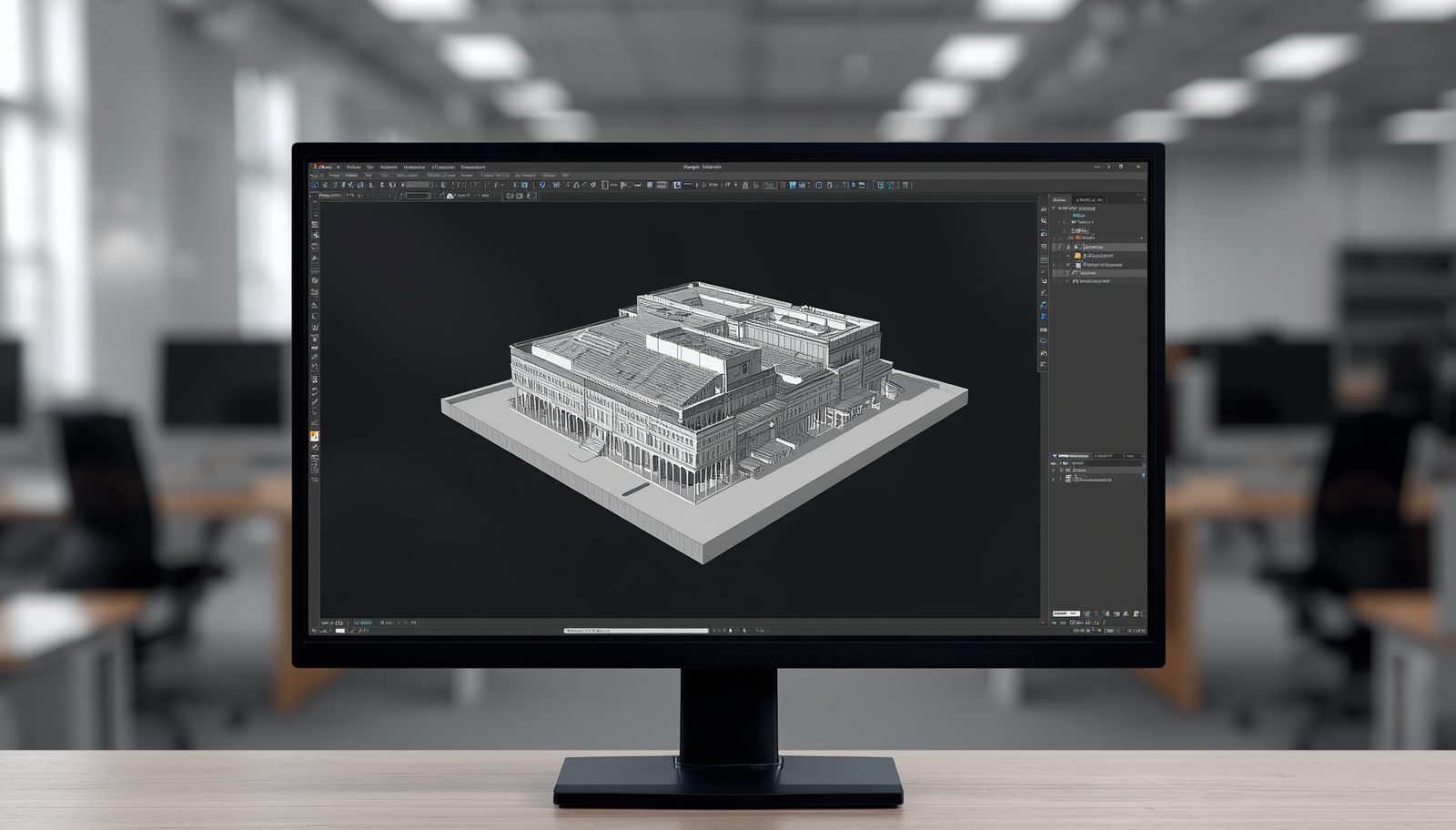
Building Information Modelling is increasingly seen as a key solution in building operations. In practice, however, it is clear that, in the context of facility management, a BIM model primarily serves as a structured basis for geometric and alphanumeric data, rather than necessarily as a complete digital representation of the building.
For many BIM4FM use cases, room structures, room master data and basic identification data in the model are sufficient. It is particularly important that this data can be clearly linked to further information, such as the CAFM system or a point cloud.
The white paper emphasises a clear principle: as much as necessary, as little as possible. What matters is not the maximum level of modelling detail, but the concrete benefit for building operations. A lower level of geometric detail may be sufficient in many cases if the relevant operational data is provided elsewhere in a meaningful way and linked to the model.
This approach is particularly important for operators because it reduces the data set to the essentials. Instead of overloading a model with irrelevant information, it is specifically determined which information is actually required for which processes. This ensures structured data maintenance and consistent data availability throughout the entire lifecycle.
Point clouds as a digital layer of reality

Point clouds play a particularly important role in existing building surveys. They are used to spatially capture the actual condition of a building and to derive geometric and alphanumeric survey data from this. This includes, for example, actual dimensions, the condition of the building, and further information on existing building components and surfaces.
A particular advantage is that point cloud data can supplement BIM models and, in some cases, even partially replace them. They create a visual and realistic layer that helps to locate objects more effectively and present building conditions in a comprehensible manner.
So-called points of interest allow rooms, building components or technical installations to be precisely located and linked to specific assets in the CAFM system. 360° panoramic images also help to clearly depict the actual building situation and support maintenance or repair processes, for example.
This makes the point cloud more than just a surveying tool. It becomes a digital, augmented reality layer that provides orientation, reduces modelling effort and, in conjunction with the BIM model and the CAFM system, generates real added value.
CAFM as an operational database

Ultimately, all operationally relevant information is consolidated within the CAFM system. Here, geometric and component-related data from the BIM model is linked to dynamic operational information and maintained.
The data from the BIM model includes, for example, room names, room numbers, usage types and component IDs. In addition, the CAFM system manages data on maintenance cycles, manufacturer specifications, inspection and operational documentation, as well as other operator-specific information.
The particular advantage lies in the fact that this data does not need to be maintained twice in the CAFM system, but can be uniquely assigned to BIM model elements. The link to the BIM model creates a structured and redundancy-free database that is available at all times and supports both operational processes and subsequent analyses.
The white paper thus demonstrates that CAFM is not merely a management system, but the central hub for the use and maintenance of essential FM data. Whilst the BIM model provides the static spatial structure, the integrated CAFM system creates a consistent and up-to-date extended FM database.
Practical examples in the workplace
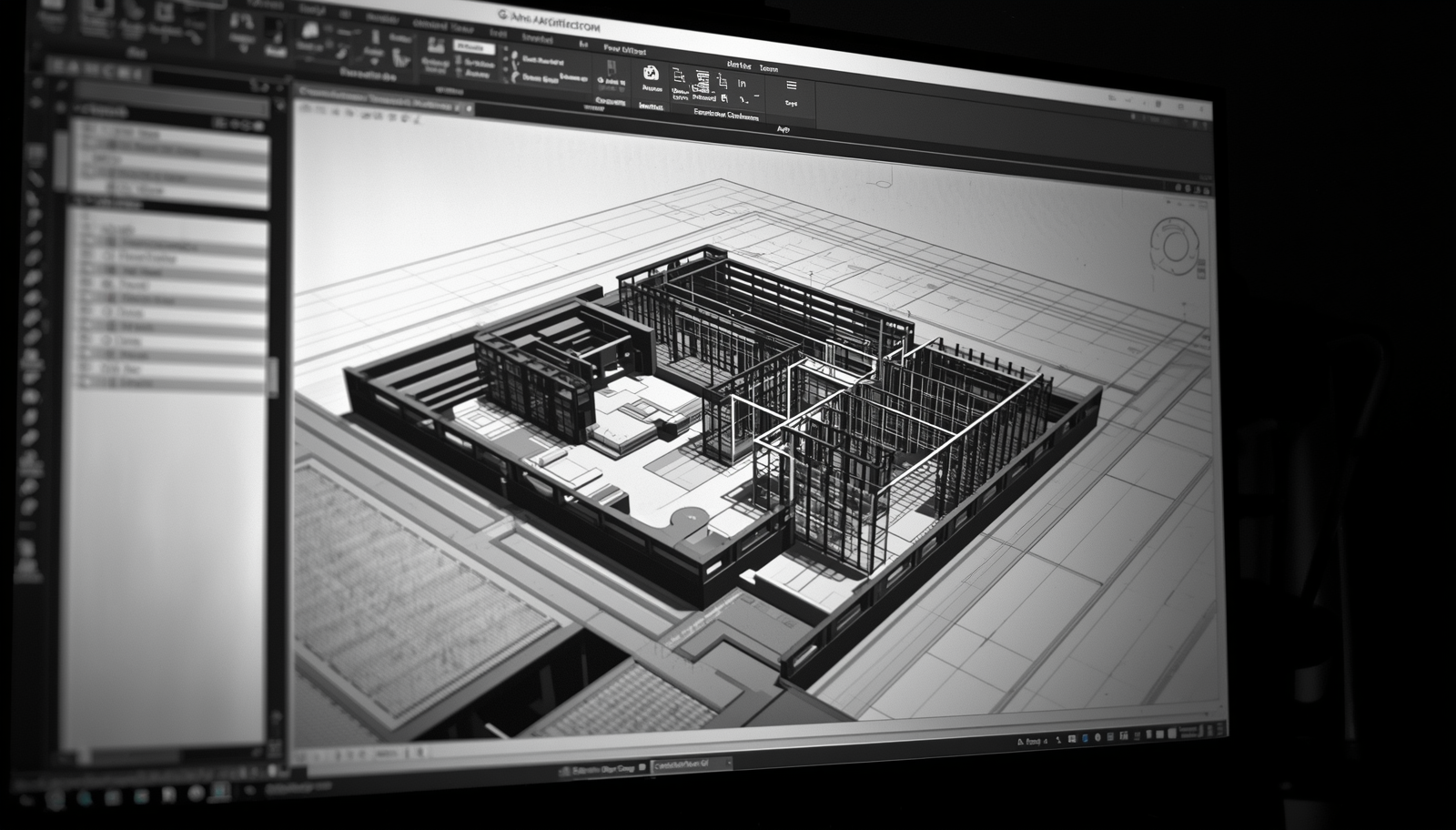
The greatest strength of the use-case-oriented approach is evident in the specific FM processes. In cleaning management, the BIM model is primarily used to map room layouts and identify areas for tendering or contract planning. Cleaning requirements for building component surfaces or window heights for the use of cleaning equipment can also be derived from it.
For this use case, only a low level of geometric detail is usually required. A representation of the room-enclosing components at a lower level of detail is sufficient in most cases. In the context of more complex façade cleaning or the determination of glass surfaces, a detailed geometric representation of these components may be useful.
The use of a BIM model linked to additional cleaning-related information simplifies the process of quantity take-offs, facilitates the transparent creation of specifications, and contributes to visually comprehensible cleaning planning. Furthermore, it supports the efficient management of external service providers.
In addition, the point cloud forms the basis for Scan2BIM modelling. For maintenance and repair, the BIM model focuses on the localisation and identification of systems. Here, a simplified geometric representation in the form of solid bodies is often sufficient. The key factors are the precise location, the maximum component dimensions and the system identification.
Maintenance intervals, manufacturer data and other operational information are maintained within the CAFM system, as these are subject to more frequent changes. By linking this data to the BIM model, assets can be consistently mapped. Point cloud data can visually enhance the model and, depending on the use case, assist with the recording, identification or location of technical systems or safety-critical components.
It is here in particular that the operational benefits are most evident. For example, search times can be reduced, enabling faults to be rectified more efficiently. The availability of structured data supports capacity planning and can increase the efficiency of operational processes.
For variant studies in relocation management or energy simulations, however, a significantly more detailed BIM model is required. In these use cases, the focus is no longer merely on localisation and management, but on reliable foundations for planning, analysis and decision-making.
In relocation management, this concerns, for example, inventory or machinery. In energy simulations, the focus is on room-enclosing components, materials, component layers and technical systems. Here, a more detailed geometric representation in the BIM model is necessary.
If the current condition of a building in the existing stock is not adequately documented, laser scanning can play a key role. The point cloud data captured then serves as the basis for a more detailed as-built model and provides the foundation for further applications.
Conclusion
BIM4FM demonstrates that digitalisation in building operations is successful when it is tailored to actual needs. Not every building requires a highly detailed as-built model. In many cases, a BIM model with a simple geometric representation is sufficient. The key lies in a structured FM database linked to the BIM model, as well as the potential to expand it using point cloud data.
The key to success lies in the precise definition of requirements. If FM objectives, building management services and the resulting BIM4FM use cases are clearly defined, the necessary information requirements and the type of representation can be precisely determined, thereby striking a sensible balance between effort and benefit with the appropriate data quality.
At the same time, however, it is clear that the success of BIM does not depend solely on the technology, but on companies’ ability to manage this transformation holistically. Digitalisation always involves organisational development and, with it, a profound transformation of structures, processes and mindsets.
This is precisely where BIM consultancy comes in, as it combines strategy, technology and organisation into a holistic approach to transformation. The structured consultancy process, from analysis through implementation to pilot projects, lays the foundation for sustainable digitalisation.
However, the decisive factor for success remains people. Only when change management is actively shaped and employees are placed at the centre can BIM realise its full potential. This makes digitalisation in the construction industry not only more efficient, but also more sustainable, resilient and future-proof. It evolves from a purely IT-related issue into a genuine strategic business lever.
Anyone wishing to further develop building operations digitally should not start with the technology, but with the objectives. The key question is: What information is actually required for which FM processes?
If you too would like to optimise your project workflows using clear BIM standards, well-structured processes and a collaborative approach, please do not hesitate to contact us. Together, we will develop digital solutions that deliver real value for you.
